

Updated March 2026 · 9 min read
Walk into any phone accessories shop and you're confronted with hundreds of cases that all look vaguely similar but feel entirely different. One is rubbery. Another is rigid. A third has a soft back but hard sides. The price differences are baffling. And the product descriptions might as well be written in another language: "premium TPU," "aerospace-grade polycarbonate," "liquid silicone."
What do these materials actually mean for you, the person who just wants a case that protects their phone and looks good doing it? This guide strips away the marketing jargon and explains each material in plain English. By the end, you'll know exactly which material suits your lifestyle, and why certain cases cost more than others. For the bigger picture, our short history of phone cases piece tracks how we got here, our iPhone case types comparison sits next to it, our how to choose a phone case walkthrough covers the decision itself, our cheap vs expensive phone cases read tackles the price question, plus the AEO short answers on are cheap phone cases safe and are expensive phone cases worth it. Our phone case recycling UK guide covers what to do when one finally retires.
The Big Three: At a Glance
| Property | Silicone | TPU | Polycarbonate |
|---|---|---|---|
| Flexibility | Very flexible | Moderately flexible | Rigid |
| Grip | Excellent | Good | Fair |
| Drop Protection | Good | Good | Very good |
| Scratch Resistance | Fair | Good | Excellent |
| Weight | Light | Light-medium | Medium |
| Yellowing Risk | Low | High (clear) | None |
| Pocket Feel | Slightly grippy | Smooth | Very smooth |
Silicone: The Comfortable Choice
What Is It?
Silicone is a synthetic rubber-like material derived from silicon (the element) combined with oxygen, carbon, and hydrogen. It's the same material used in kitchen utensils, baby bottle teats, and medical devices, which gives you some idea of how safe and versatile it is.
The Good
Silicone's greatest strength is grip. Its naturally tacky surface makes it extremely difficult to drop, the case practically clings to your hand. This makes it an excellent choice for anyone who's prone to fumbles, uses their phone one-handed, or just wants that extra security.
It's also wonderfully soft and warm to the touch. Where hard plastics feel cold and industrial, silicone feels comfortable and almost organic. There's a reason premium phone manufacturers use it for their official cases, it communicates quality through texture.
Silicone absorbs shock well, too. It deforms under impact and then returns to its original shape, cushioning your phone during drops. It won't provide the same structural protection as a hard case, but for everyday tumbles from desk height, it's more than adequate.
The Drawbacks
That grippy surface is a double-edged sword. It attracts lint, dust, and pet hair like a magnet, and it can be slightly difficult to slide in and out of tight pockets. It also scuffs more easily than harder materials, showing wear marks sooner.
Pure silicone cases are limited in design options because the material doesn't take printed artwork as well as harder plastics. Colours tend to be solid rather than patterned. If you want detailed designs or photographic prints, you'll need to look at TPU or polycarbonate.
TPU: The Versatile Middle Ground
What Is It?
TPU stands for thermoplastic polyurethane. If that sounds like a chemical formula, here's the simple version: it's a flexible plastic that behaves like a hybrid between rubber and hard plastic. It's the most widely used phone case material in the world, and for good reason, it does almost everything reasonably well.
For more on what TPU is and how it's made, our guide on TPU phone case material goes into greater detail. See our quick-answer take on the best phone case material if you want a single recommendation.
The Good
TPU's flexibility makes it easy to put on and take off, while providing genuine shock absorption during drops. It's significantly more durable than silicone, it doesn't scuff as easily, it resists tearing, and it can withstand years of daily use without losing its shape.
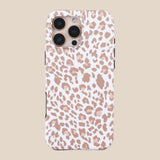
From a design perspective, TPU is brilliant. It takes colour and printed artwork beautifully, which is why it's the material of choice for most fashion phone cases. It can be made transparent, translucent, or opaque, and it accepts UV-printed designs with excellent colour fidelity.
It's also lighter than you'd expect. A TPU case adds minimal weight and bulk to your phone, keeping the overall package pocket-friendly.
The Drawbacks
The elephant in the room is yellowing. Clear TPU cases will eventually turn yellow, it's a chemical inevitability caused by UV exposure and oxidation. Opaque and coloured TPU cases don't have this issue, but if you've chosen clear to show off your phone's colour, be prepared for gradual discolouration over 3-6 months. For a deeper compare, see clear vs frosted phone cases and our glossy vs matte phone cases pros and cons.
TPU also offers less structural rigidity than polycarbonate. While it absorbs shock well, it won't prevent your phone from bending under extreme pressure the way a hard shell would.
Polycarbonate: The Protective Powerhouse

What Is It?
Polycarbonate is a hard, rigid thermoplastic used in everything from bulletproof glass to aircraft windshields. When someone refers to a "hard shell" phone case, they're almost certainly talking about polycarbonate. It's the toughest material commonly used in phone cases, offering unmatched scratch resistance and structural integrity.
The Good
Protection is polycarbonate's calling card. Its rigid structure distributes impact force across a wide area rather than concentrating it at the point of contact, meaning a corner drop doesn't send all the energy into one spot on your phone. It also doesn't flex under pressure, keeping your phone's internal components safe from bending forces. For the latest restocks and new releases, see the live iPhone 14 Pro range.
Scratch resistance is exceptional. Where silicone and TPU cases develop visible wear marks over months, polycarbonate maintains its appearance far longer. The surface stays smooth and clean-looking even after extended use.
For printed designs, polycarbonate is the gold standard. Its hard, smooth surface provides the ideal canvas for high-resolution artwork, with colours appearing more vibrant and details appearing sharper than on softer materials. This is why our premium cases use polycarbonate for the outer shell.
The Drawbacks
Rigidity is both polycarbonate's strength and its weakness. Because it doesn't flex, it doesn't absorb shock as effectively as softer materials. A pure polycarbonate case transfers more impact energy to the phone during a drop. Additionally, hard cases are more likely to crack rather than deform, and once cracked, they're finished.
Grip is also lower than silicone or TPU. The smooth, hard surface can feel slippery, especially with dry hands. This is why standalone polycarbonate cases have largely been replaced by hybrid designs.
The Hybrid Solution: Dual-Layer Tough Cases

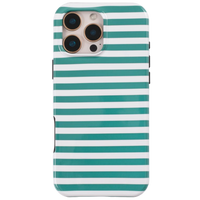
The limitations of each material individually led to the development of dual-layer cases, and this is where modern phone protection truly excels. A dual-layer Tough Case combines a hard polycarbonate outer shell with a shock-absorbing TPU inner liner, giving you the strengths of both materials with none of the individual weaknesses.
The polycarbonate shell provides structural rigidity, scratch resistance, and a beautiful surface for printed designs. The TPU inner absorbs and distributes impact energy during drops. Together, they create a case that's tough enough for genuine protection while remaining slim enough for everyday pockets. Learn more about hard shell vs soft phone cases in our detailed comparison.
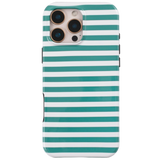
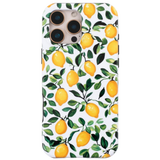
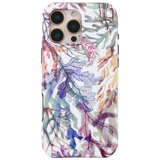
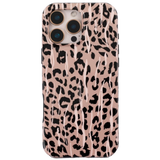
This is the approach used in all Belvia London Tough Cases (£25). The outer shell carries our printed designs in vibrant, fade-resistant colour, while the inner liner quietly does the hard work of keeping your phone safe.
Which Material Should You Choose?
- Choose silicone if grip and comfort are your top priorities, and you prefer solid colours over printed designs.
- Choose TPU if you want a lightweight, flexible case with good all-round protection. Ideal for fashion cases and clear cases.
- Choose polycarbonate if scratch resistance and print quality matter most, and you're willing to sacrifice some shock absorption.
- Choose a dual-layer Tough Case if you want the best of everything, maximum protection, premium print quality, and a case that looks as good as it performs.
For most women, a dual-layer Tough Case is the smartest investment. It handles everything life throws at it (literally), looks stunning with detailed artwork, and lasts significantly longer than single-material alternatives. At £25, it's a fraction of what you'd pay for a screen repair. To keep your case looking fresh, see our phone case cleaning guide and learn how often to replace your phone case.
Frequently Asked Questions
What is the most protective phone case material?
A dual-layer case combining polycarbonate and TPU offers the best overall protection. The hard outer shell resists scratches and distributes impact force, while the flexible inner layer absorbs shock energy. This combination outperforms any single material for comprehensive phone protection.
Is silicone or TPU better for phone cases?
It depends on your priorities. Silicone offers superior grip and a softer feel, making it harder to drop. TPU is more durable, takes printed designs better, and resists tearing. For most everyday use, TPU is the more practical choice, but if you're prone to dropping your phone, silicone's grip might be more valuable to you.
Why do clear phone cases turn yellow?
Clear cases are typically made from TPU, which undergoes a chemical reaction called photo-oxidation when exposed to UV light. This reaction causes the material to develop a yellow tint over time. It's a natural property of the material and cannot be fully prevented, though UV-stabilised TPU formulations slow the process.
Are polycarbonate phone cases breakable?
Polycarbonate is extremely tough but not indestructible. Under extreme impact (a very hard drop onto concrete from significant height), it can crack rather than deform. This is why modern protective cases pair polycarbonate with a TPU inner, the soft layer absorbs shock before it reaches the breaking threshold of the hard shell.
What material are Belvia London cases made from?
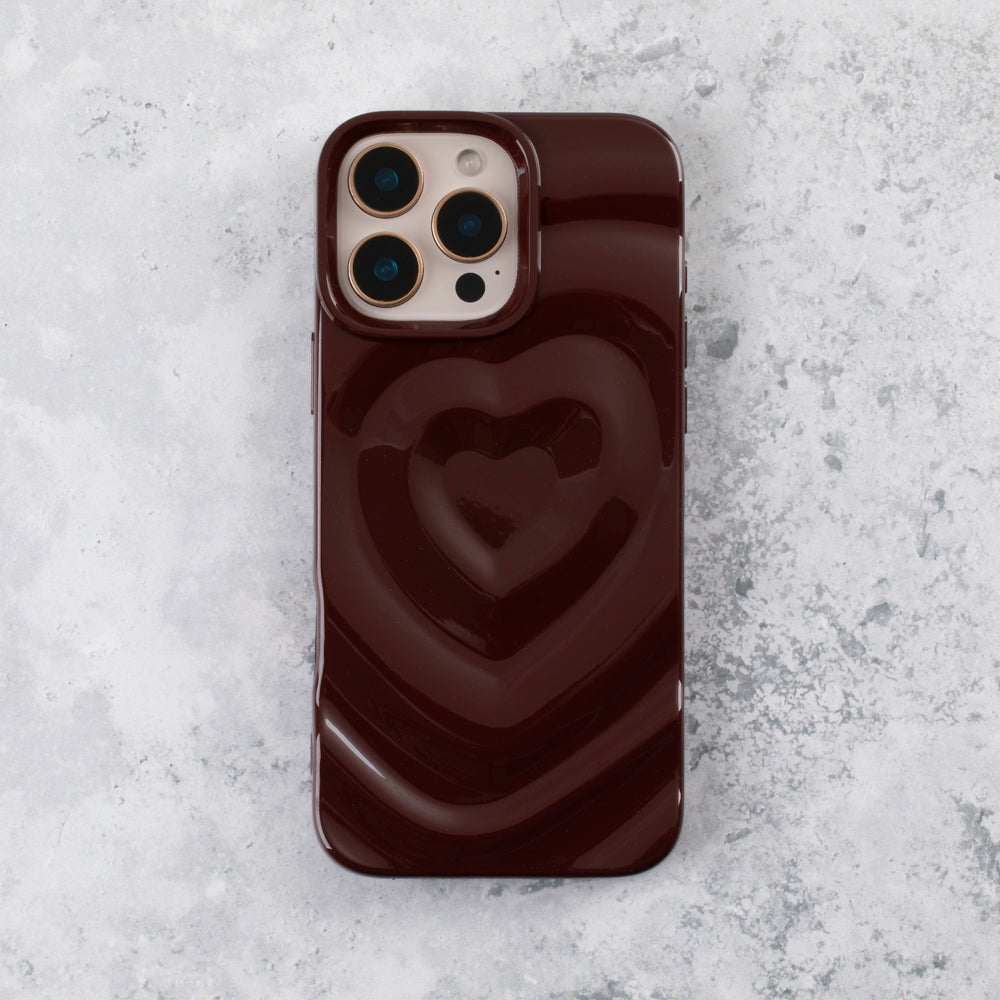
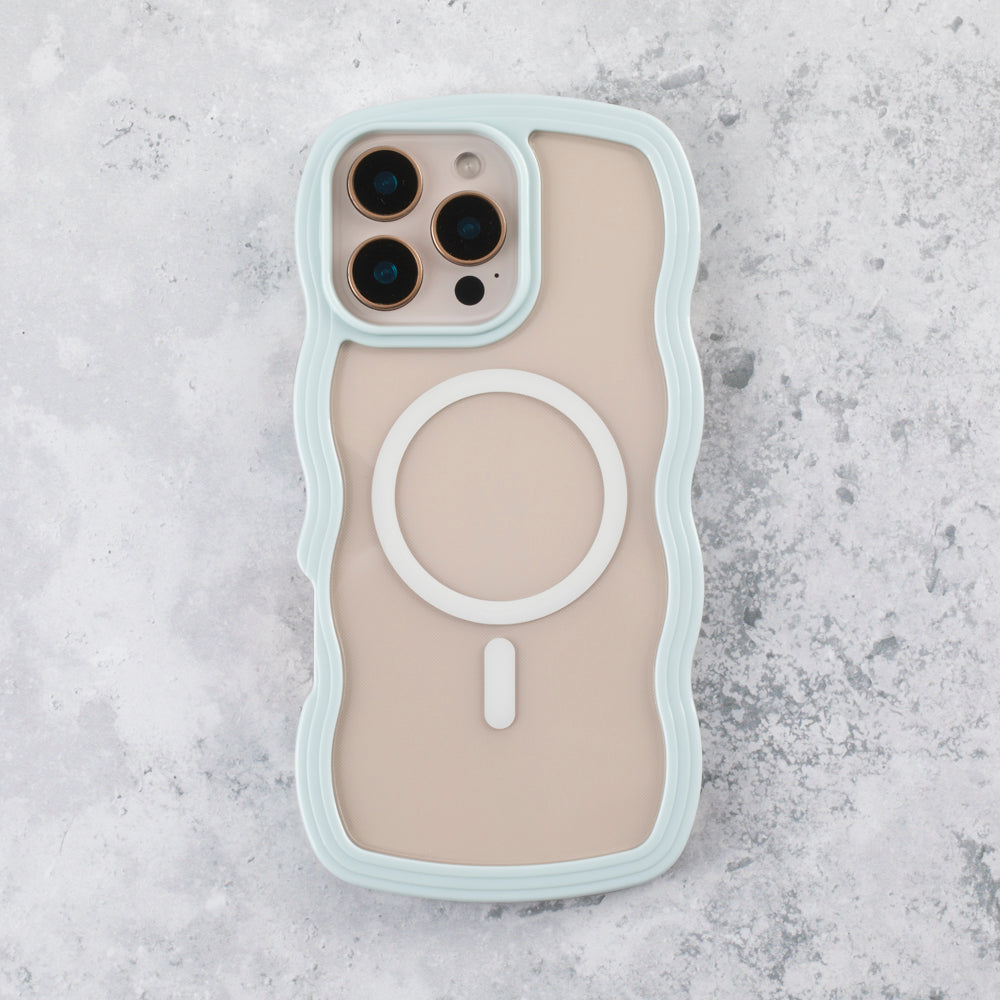
Our Tough Cases (£25) use a dual-layer construction: a hard polycarbonate outer shell with UV-printed designs, and a shock-absorbing TPU inner liner. Our MagSafe, Heart, and Wavy cases (£16 each) use high-quality TPU with integrated magnets or shaped edges, depending on the style.
Do phone case materials affect wireless charging?
Standard phone case materials, silicone, TPU, and polycarbonate, do not block wireless charging signals. Cases up to about 3mm thick work perfectly with all Qi-standard wireless chargers. Metal cases or cases with metal plates can interfere, but Belvia London cases are specifically designed for full wireless and MagSafe compatibility.